Find out more
To learn more about opportunities in Tāmaki Makaurau Auckland, get in touch with our team of experts.
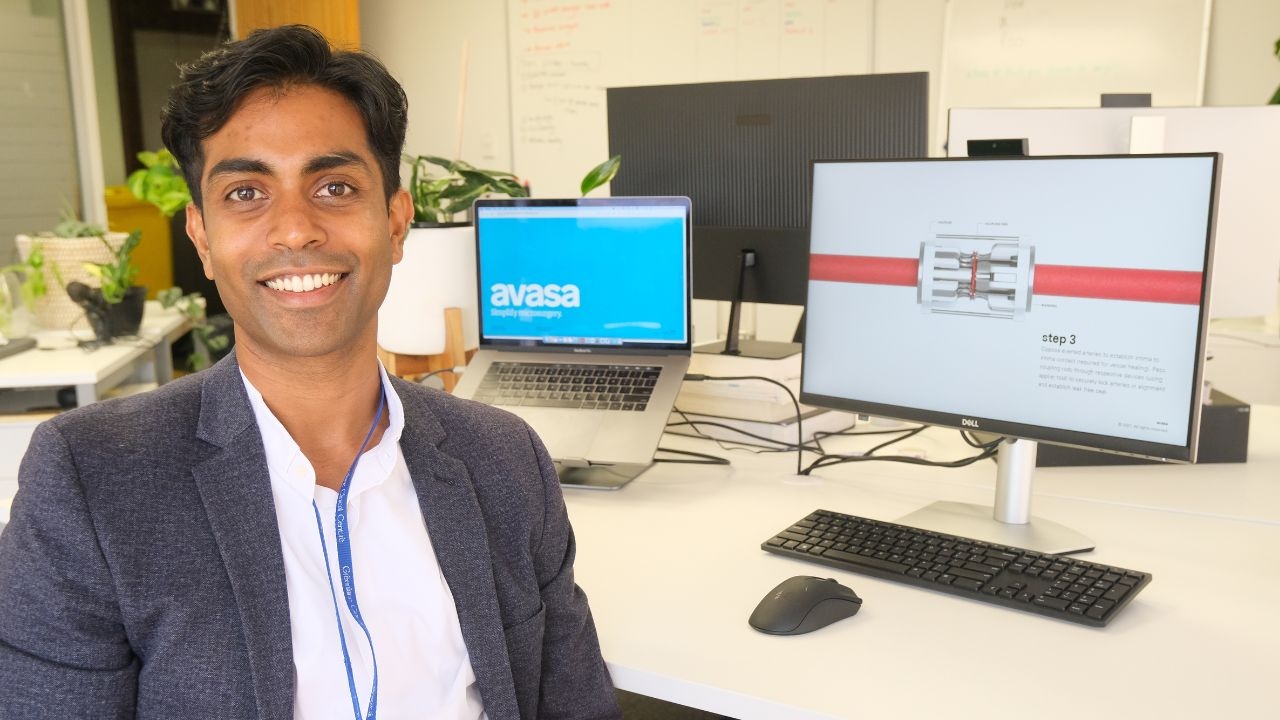
Tāmaki Makaurau Auckland has built one of the world’s most respected centres for biomedical engineering. It is here, inside the University of Auckland’s Bioengineering Institute, that medtech startup Avasa is solving a problem that surgeons have faced for six decades.
For more than 60 years, reconstructive microsurgery has enabled surgeons to rebuild a body damaged by cancer or trauma. And while the skills and outcomes have advanced, one technique has barely changed: surgeons still hand-sew arteries, one stitch at a time, in a procedure that takes 40 to 60 minutes per vessel.
In 2018, New Zealand plastic surgery resident Nandoun Abeysekera founded medtech company Avasa, setting out to design a device that would solve this problem for the next generation.
“I didn’t get into this with the idea of being an entrepreneur,” he says. “But I had an incredible mentor in plastic surgery, Prof. Jon Mathy. He was really inspiring, Stanford and Harvard trained, and one of the most technically gifted surgeons I’d encountered. He took me under his wing as a medical student, and I worked directly in his team during my time as a resident.
“One Sunday morning, we were both on call. I’d been thinking about designing a device that could connect arteries, and I presented the idea to him. Jon simply said, ‘Do it.’ I handed in my resignation the next day.”
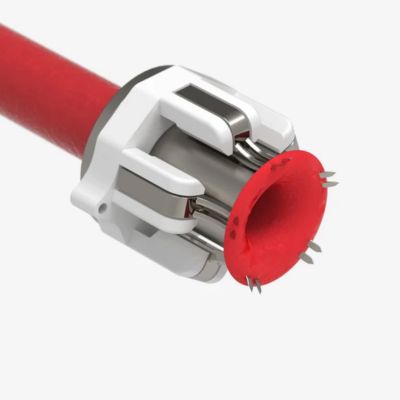
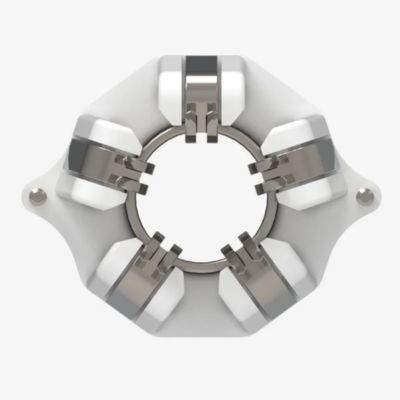
Decades ago, a small device called a venous coupler transformed the way surgeons join veins, turning a delicate 40-to-60-minute hand-sewn join into something that could be done in under 10 minutes. It was safer, with better patient outcomes, and changed the standard of care. But the coupler doesn’t work on arteries, which have continued to be sewn by hand by generations of surgeons.
“The technical craft has evolved, but the technology servicing the microsurgeon hasn’t,” says Abeysekera. “It seemed like an obvious idea: if we know this concept works for veins, and improves patient outcomes, let’s do that for arteries.”
Seeing the gap took someone who understands two worlds – the surgery profession itself and medical hardware. Before medicine, Abeysekera completed a biomedical engineering degree at the University of Auckland. He has stayed within a few blocks of the same campus for the 20 years since. That dual fluency, in engineering and in surgery, gave him the contacts and skills to bridge the two disciplines.
When Abeysekera decided to design and build a device, he reached out to professors who had taught him, Andrew Taberner and Poul Nielsen. They gave him an office inside the Auckland Bioengineering Institute and access to its resources. Abeysekera describes a culture that is rare and distinctly local.
The Bioengineering Institute is very open-minded. They value exploration and they encourage it.
“I almost think of it like New Zealand in the ’90s, where you’d know your neighbours and have casual conversations over the fence. That culture has been preserved as a microcosm here,” he says.
The Institute, now directed by Merryn Tawhai and home to pioneering figures such as Peter Hunter, treats commercialisation as part of the scientific mission rather than a distraction from it. When Avasa was ready to incubate as a company, it was given a floor to work on, with no strings attached.
“The message was: you have an idea, and the opportunity to build a company around it, so let’s give you the infrastructure to do that,” Abeysekera says. The University’s commercialisation office, UniServices, played the same supportive role.
UniServices put in the first round of money through its Inventors Fund, $60,000, then a further $140,000 six months later. Abeysekera made that $200,000 last four years by spending every dollar on the company. By 2021, he had a proof of concept validated in animals and patents filed.
That milestone unlocked the next stage. In 2022, Bridgewest Ventures invested $250,000 alongside $750,000 from Callaghan Innovation’s technology incubator. A seed extension followed with a roll call of New Zealand backers, and two years later Movac led a $5 million round that brought in investors including Icehouse Ventures. Avasa has now raised around $8 million.
Having both Bridgewest and Movac on the register is, for Abeysekera, a real advantage of the local market. Bridgewest pushed him to think about the United States early, and not just the regulatory path, but how Americans negotiate and operate. Movac brought insights and advice after decades of watching Kiwi companies reach global markets.
Abeysekera is clear about why Auckland suits the work, and it comes down to two things: the quality of the thinking the city allows, and the nature of the market he is entering.
“There’s less distraction here,” he says. “For the type of deep thinking this work requires at this stage, I need stillness, because internally the creative process is explosive and uncomfortable. If I was in the States, I’d be under a different kind of pressure."
Being here has let me do the deep exploration I needed before I could make fast decisions with confidence.
The Avasa coupling system is designed for arterial anastomosis in free flap surgery, where a large piece of tissue is moved to rebuild a cavity left by cancer or trauma. The device stays in the body for good.
“You don’t release a beta,” he says. “When you enter the market, you’re entering with a very high-fidelity product that won’t change substantially over the next few decades. Medtech demands a different approach, and a different timeline compared to product development in other sectors.”
New Zealand’s medtech talent pool is small, but has real depth. Companies such as Fisher & Paykel Healthcare have trained a generation of New Zealanders in the sector, and a new era of clinician-founders are building businesses, such as Alimetry, JUNOFEM and Aroa Biosurgery.
Abeysekera has built a team of six. Everyone has a technical background, and he runs it the way he was trained to run an operating theatre. “I operate a small, invested team by design,” he says.
“Extreme ownership, high velocity, internal drive for excellence. It mirrors how surgical teams actually work.”
With the device built and validated, Avasa is now gathering the safety data it needs for a submission to the United States Food and Drug Administration, targeting clearance around the third quarter of 2027. The US, and large cancer reconstruction centres such as MD Anderson, will be the first market.
For Abeysekera, the positive benefits for patients are overwhelming. Saving 40 minutes inside a six-hour, or sometimes up to a 12-hour operation means less time under anaesthesia for the patient, with surgical teams freed to help more patients. Those are the conversations he is now having with surgeons in the United States, the conversations, he says, that he left clinical medicine to have. He is having them as the founder of a company built, funded and proven in Auckland.
To learn more about opportunities in Tāmaki Makaurau Auckland, get in touch with our team of experts.